





You did your job in a place where one missed step can be catastrophic, and something went wrong that you did not cause. The Calderon Law Firm represents workers, contractors, and families hurt by refinery explosions, fires, and chemical releases along the Houston Ship Channel and across the Gulf Coast.
If you need a refinery explosion lawyer, our team investigates what failed at the unit, identifies every company that may be responsible, and pursues a claim against them while you focus on healing. The first step is a free case review, and there is no fee unless we win.
Se habla español. You can speak with our attorneys and case managers directly in Spanish, with no interpreter in the middle. Call +1 (346) 999-5673 any time, day or night, for a free case review.
Do We Handle Refinery Explosion Cases Like Yours?
Yes. Our attorneys handle injury and wrongful death claims from refinery explosions, flash fires, and toxic releases in Pasadena, Deer Park, Baytown, Texas City, and across the Houston area. Many of these clients are contract workers, but we also help direct employees and others hurt inside the fence line.
The people we typically hear from include:
- Turnaround and maintenance contractors, such as pipefitters, welders, boilermakers, scaffold builders, and electricians.
- Direct refinery employees whose employer does not carry workers' compensation insurance.
- Truck drivers and vendors hurt while loading at a rack or making a delivery inside the fence line.
- Families who lost someone in a unit fire or blast.
For explosions at chemical plants rather than refineries, our Houston chemical plant explosion lawyer page covers those facilities. Our broader Houston plant explosion lawyers page explains how we approach industrial blasts of every kind.
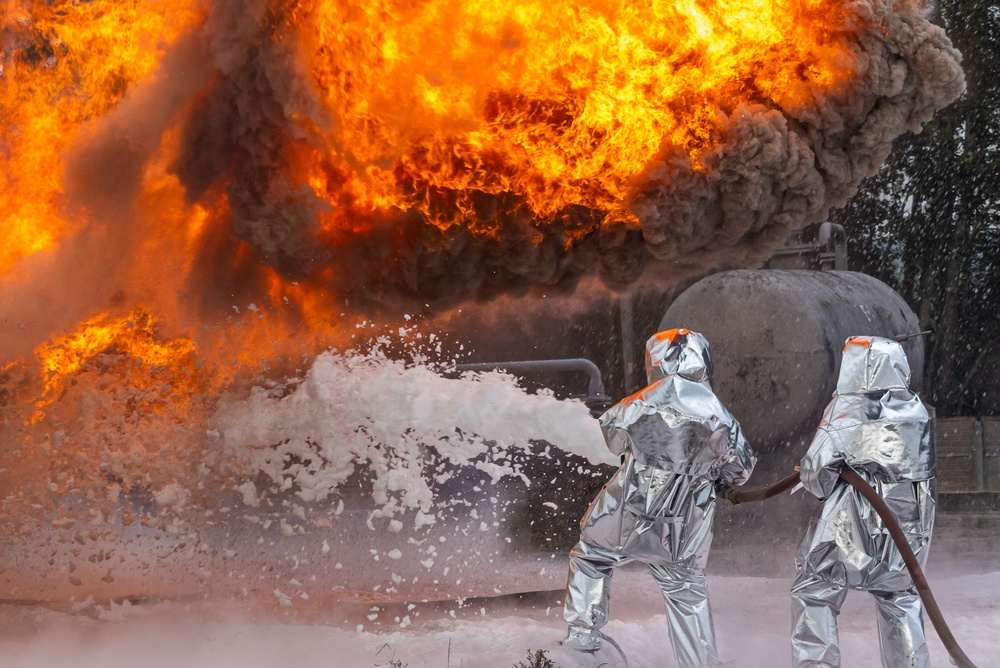
Why Refinery Claims Are Different From Other Plant Cases
Refinery claims turn on process safety records, contractor arrangements, and the timing of the work. A blast during a turnaround, when hundreds of outside workers are on site and units are being opened, shut down, and restarted, raises different legal questions than a single equipment failure at a small plant.
What Happens During a Turnaround, and Why Does It Matter?
A turnaround is a planned shutdown where a refinery takes a unit offline for inspection, repair, and upgrades. It brings a large contractor workforce into the plant for a short, intense window.
Our attorneys often see the same pressure points: rushed permits, incomplete handoffs between crews, and startups that begin before every system is checked.
The U.S. Chemical Safety Board's investigation of the 2005 BP Texas City refinery explosion is a well-known example. Fifteen people died and 180 were injured when a unit was being restarted, and many of the victims were in contractor trailers placed near a vent stack.
How OSHA's Process Safety Rule Shapes a Refinery Case
Refineries that handle large amounts of flammable material must follow the Occupational Safety and Health Administration (OSHA) Process Safety Management standard, 29 CFR 1910.119. This rule, called PSM, requires written programs for how hazardous processes are designed, maintained, changed, and restarted.
PSM does not create a lawsuit on its own, but it does create a paper trail. When a refinery skipped a required step, the records (or the missing records) can help show what went wrong.
| PSM requirement | What the refinery must do | Records our team may request |
| Contractors, paragraph (h) | Check a contractor's safety record and tell contract employers about known fire, explosion, and toxic release hazards | Contractor safety evaluations, hazard briefings, site orientation files |
| Pre-startup safety review, paragraph (i) | Confirm safety systems are ready before hazardous chemicals are introduced to new or modified equipment | Startup checklists, sign-off sheets |
| Mechanical integrity, paragraph (j) | Inspect, test, and fix process equipment under written procedures | Inspection logs, deficiency reports, repair histories |
| Hot work permits, paragraph (k) | Issue a permit before welding or cutting on or near a covered process | Hot work permits, gas testing records |
| Management of change, paragraph (l) | Follow written procedures before changing chemicals, equipment, or procedures | Change requests and approvals |
| Incident investigation, paragraph (m) | Start an investigation within 48 hours of an incident | Internal incident reports, prior near-miss files |
Who May Be Liable for a Refinery Explosion?
Liability after a refinery explosion often falls on more than one company. Depending on the facts, the refinery owner, the contractor that ran the job, a staffing company, an equipment maker, or a maintenance firm may share responsibility.
Can a Contract Worker Sue the Refinery Owner?
Sometimes, but Texas law sets a high bar. Under Chapter 95 of the Texas Civil Practice and Remedies Code, a property owner is not liable to a contractor's worker hurt while repairing or modifying an improvement unless the owner kept some control over how the work was done and actually knew of the danger but failed to adequately warn.
So we look closely at who wrote the permits, who ran the safety meetings, who ordered the restart, and what the owner knew. Whether Chapter 95 applies at all is one of the first issues we evaluate.
Contractors, Staffing Companies, and Equipment Makers
Your employer may be protected by workers' compensation, but other companies on the site are not your employer. A contractor that left a line open, a scaffold company, or the maker of a defective valve may each face a separate claim.
When Your Employer Is a Non-Subscriber
Texas lets most private employers decide whether to carry workers' compensation, and the Texas Department of Insurance explains that coverage is not required in most cases. An employer without coverage is called a non-subscriber.
A non-subscriber can be sued directly for negligence. Under Texas Labor Code §406.033, it also loses key defenses, such as arguing that you or a coworker caused the accident. You still need to prove the employer was negligent, and that is where our investigation comes in.
What Evidence Matters After a Refinery Blast?
The evidence that matters most is the evidence the refinery controls: permits, alarm and control-room data, maintenance files, and the names of everyone on the unit. Much of it can be changed, overwritten, or lost if no one asks for it early.
We typically start by sending preservation letters to every company involved, then gathering records, photos, crew lists, and witness names. Engineers and process safety professionals help us read control-room data.
Where CSB and OSHA Investigations Fit In
Government investigations help, but they do not replace your own. Federal law says no part of the Chemical Safety Board's conclusions, findings, or recommendations may be admitted as evidence in a suit for damages, so a CSB report cannot simply be handed to a jury.
The underlying facts, documents, and witnesses are still available through the court process. OSHA citations can point to problem areas, but OSHA looks at safety violations, not at your losses.
"Many times you're going up against a very big company with what seems like unlimited resources. It truly is David versus Goliath."
José Calderón, founding attorney
Our attorneys and case managers work to level that field, with a team that knows how refinery defense lawyers build their cases. Call +1 (346) 999-5673 today for a free, confidential case review.

How Our Team Works a Refinery Injury Case
A refinery injury case with our firm moves in clear stages, and your case manager keeps you updated at each one. Most cases start with investigation and end in either a negotiated settlement or a trial.
- Free case review. We listen, ask about the unit, your employer, and your injuries, and explain your options honestly.
- Investigation. We identify every company on site, request records, and consult engineers who understand refinery processes.
- Medical documentation. We help coordinate records for burns, lung injuries, hearing loss, or brain injuries, including future care.
- Claim and negotiation. We present the claim to each responsible company and its insurers.
- Lawsuit if needed. Many refinery cases in Pasadena, Deer Park, and Baytown are filed in the Harris County district courts at 201 Caroline in Houston. A Texas City case may belong in Galveston County.
Realistic Expectations About Time and Pressure
Refinery cases are rarely fast. Large companies and their insurers usually defend these claims hard, and a case with several defendants may take a year or more, longer if it goes to trial.
We tell you that from day one, and your case manager keeps you updated along the way.
Texas Laws and Deadlines for Refinery Injury Claims
In most Texas refinery injury cases, you have two years from the date of the injury to file a lawsuit. Waiting too long can end the claim no matter how strong the facts are, so early action protects your options.
| Rule | What it means for you | Source |
| Two-year filing deadline | Most personal injury suits must be filed within two years of the injury | Tex. Civ. Prac. & Rem. Code §16.003 |
| Proportionate responsibility | You can recover if you are 50% or less at fault, but your recovery is reduced by your share | Tex. Civ. Prac. & Rem. Code §33.001 |
| Workers' comp as exclusive remedy | If your employer carries comp, you generally cannot sue that employer for negligence | Tex. Labor Code §408.001 |
| Third-party claims | You can receive comp benefits and still pursue other negligent companies | Tex. Labor Code §417.001 |
| Property owner protection | Owners face liability to contractors only with control plus actual knowledge | Tex. Civ. Prac. & Rem. Code §95.003 |
The Texas two-year statute of limitations in §16.003 and the proportionate responsibility rule in §33.001 apply to most of these claims. Proportionate responsibility, also called comparative fault, means a jury assigns each party a percentage of blame.
Companies often argue that the injured worker skipped a step. Our role is to answer with the permits, records, and testimony that show who really controlled the work.
What Compensation May Cover
Compensation after a refinery explosion may cover your medical care, lost income, and the ways the injury changes your life. Serious burns, inhalation injuries, and brain injuries often need years of treatment, so a fair claim looks forward, not only back.
Depending on the case, damages may include:
- Past and future medical care, including burn units, skin grafts, surgery, and therapy
- Lost wages and reduced earning capacity, which matters for skilled trades
- Physical pain, mental anguish, scarring, and disfigurement
- Physical impairment and loss of enjoyment of daily life
- For families who lost someone, the losses Texas law allows in a wrongful death claim
When a company acted with gross negligence, Texas law may also allow exemplary (punitive) damages in some cases. Every case is different, and we explain what applies to yours after we review the facts.
What Does a Refinery Accident Attorney Cost?
Hiring our refinery accident attorneys costs nothing up front. We work on a contingency fee, which means our fee is a percentage of what we recover, commonly about 33% to 40% in Texas, and you owe no fee unless we win.
We also promise that our firm will never take home more than you do. We explain the fee and case costs in writing before you sign, so you know exactly how it works.
Refinery Explosion Lawyer FAQs
Can my family file a claim if my husband died in a refinery explosion?
Yes, in many cases. Texas wrongful death law lets a surviving spouse, children, and parents bring a claim, usually within two years of the death. If the employer carried workers' comp, the family may still pursue other negligent companies, and a spouse or the worker's children may seek exemplary damages from the employer when its gross negligence caused the death.
Should I talk to the refinery's investigators or insurance adjuster?
It is usually wise to speak with a lawyer first. Company investigators and adjusters work for the refinery or its insurer, and a recorded statement given while you are in pain or on medication can be used to shift blame to you. Our team can handle those communications for you.
Do I need a Houston lawyer if the explosion happened in Texas City or Baytown?
A Houston-based firm can handle cases across the Gulf Coast refining corridor. Texas venue law generally allows a suit in the county where the explosion happened or where a corporate defendant has its main Texas office, which can mean Harris or Galveston County.
Can I file a claim if a refinery explosion hurt me outside the plant?
Yes, in many cases. Neighbors, passing drivers, and nearby workers hurt by a blast wave, flying debris, fire, or a chemical release may be able to bring a negligence claim against the refinery operator. Because you did not work at the site, workers' comp rules and Chapter 95 usually do not limit your claim.
Shelter-in-place notices, air monitoring data, and early medical records can help connect your symptoms to the release.

Take the Next Step With Our Team
A refinery explosion can take away the work you are proud of and the paycheck your family counts on. You do not have to face the companies behind it alone.
Our attorneys and case managers are available 24/7, in English or Spanish. If you were hurt at a Ship Channel or Gulf Coast refinery, call +1 (346) 999-5673 now for a free case review.
For more background, see our guide to chemical plant explosions in Texas and what workers and families should know, or read our Google reviews from families we have helped.