





Most injury firms take an electrocution case and treat it like a fall. A Houston electrical accident lawyer who understands these files knows the case is usually won or lost on one question: who was supposed to de-energize the circuit, and why did nobody verify it?
The Calderon Law Firm handles arc flash, contact burn, and electrocution claims for Houston construction and industrial workers, and we build them around the safety program that failed rather than the injury alone. Reach us any hour at (346) 999-5673.
Electrical accidents are among the most serious workplace injuries in Texas, and they are also the most heavily regulated, which works in an injured worker's favor.
What Makes an Electrical Injury Claim Different From Other Work Injury Cases?
Electrical claims are documentation cases. Nearly every step that should have protected you generates a written record, so when a worker gets hurt, the missing paperwork often proves the violation by itself.
That is the opposite of a slip or a lifting injury, where fault is argued from testimony. Here, the lockout log either exists or it does not. The energized work permit either was issued or it was not. The arc flash boundary either was calculated or nobody ran the numbers.
That paper trail is also what sets these claims apart from the other work injury cases we handle. A warehouse forklift accident, for instance, gets reconstructed from the machine, the maintenance log, and the site conditions rather than from an energized-work permit.
We know which documents to demand and how quickly they tend to go missing.
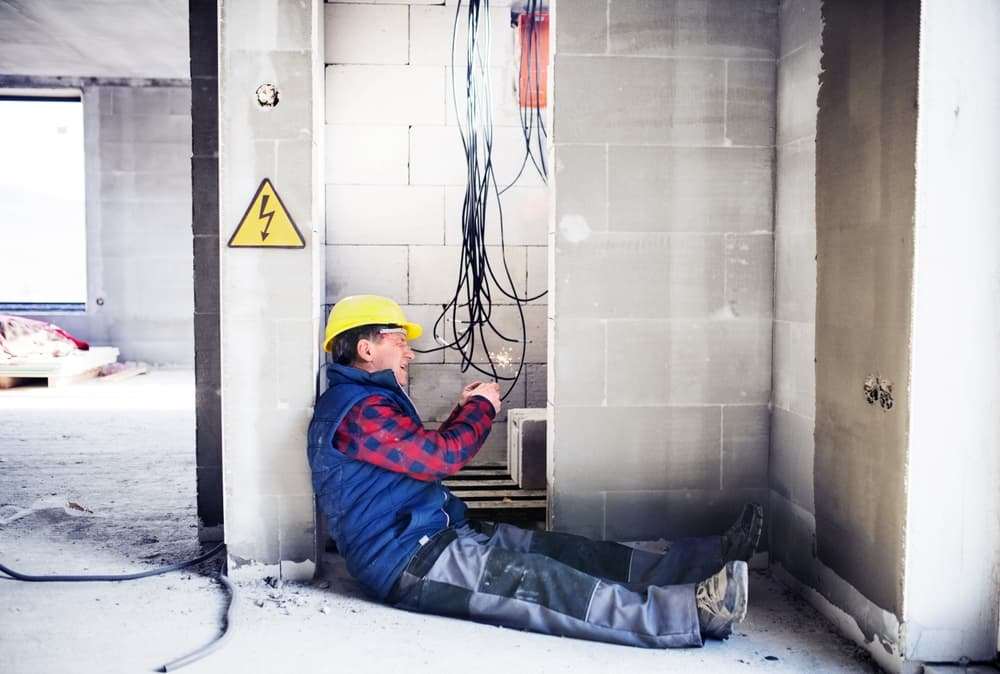
Which OSHA Rules Decide Who Was at Fault?
Fault in a Houston electrical accident usually traces to a specific federal standard. Construction site electrical work falls under OSHA Subpart K, and general industry work falls under the electrical safety-related work practices rules. A violation of either is strong evidence of negligence, even though OSHA citations are not automatically admissible.
The provisions that come up most often in our cases are straightforward once explained.
Lockout and verification
Circuits must be de-energized, locked, tagged, and then tested to confirm there is no voltage. The OSHA control of hazardous energy standard sets out how that is supposed to work. Skipping the verification step is the single most common failure we see, and it is usually a scheduling decision made above the injured worker's pay grade.
Approach boundaries and arc flash analysis
Before anyone works near exposed energized parts, someone must calculate how close a person can get and what protective clothing is required. When no analysis exists, the employer or contractor cannot credibly argue the worker chose to stand too close.
Ground fault protection and temporary power
Temporary construction power is a recurring source of injury. Missing ground fault circuit interrupters, damaged cord sets, and improvised connections are code violations that a site safety officer is paid to catch.
What Kinds of Electrical Injuries Do We Handle?
We evaluate these injuries through the legal lens of long-term cost, not medical detail. Two workers with the same voltage exposure can have very different claims depending on what the current damaged on its way through the body.
- Arc flash burns, which frequently involve multiple surgeries and skin grafting, and which support a claim for future reconstructive care
- Electrocution and cardiac events, including fatal cases that become wrongful death claims brought by surviving family
- Nerve and cognitive injury, which often appears weeks later and is the injury insurers dispute most aggressively
- Secondary trauma from falls, when a shock knocks a worker off a ladder, scaffold, or lift and the fall causes the worst damage
The last category matters more than people expect. A fall caused by a shock is still an electrical accident, and the responsible party is still the one who left the conductor live.
Can You Sue a Contractor for an Electrocution on a Houston Job Site?
Often, yes. On a multi-employer construction site, the party that created the hazard is frequently not your employer, which means a lawsuit is available even if you also receive workers' compensation benefits.
Electrical hazards are the leading cause of construction site fatalities in Texas, and Houston job sites are layered with subcontractors. Electrical contractors who failed to follow safety codes may be liable to third parties, along with general contractors that control site safety, utilities that failed to de-energize or insulate lines, and equipment suppliers that provided defective gear.
General contractor liability turns on control. If the general set the schedule, ran the safety meetings, and had authority to stop work, Texas law may hold it responsible for the conditions on its site.
Who Pays When a Utility Line Was Involved?
If the contact involved an overhead distribution line, a buried conductor, or a substation, the responsible party may be the utility rather than anyone on the job site. Utilities carry duties to maintain adequate clearances, insulate or de-energize lines on request, and mark buried facilities before excavation.
Line strike cases turn on the paperwork that preceded the work. Was a clearance requested? Was a line located ticket opened before the trench was dug? Was the utility told there would be a crane, a lift, or a mast within reach of the conductor?
Timing matters more here than in most injury cases. Suits against private companies generally run two years from the injury under Texas Civil Practice and Remedies Code Section 16.003, but when the utility is a municipal or district entity, notice deadlines shrink considerably, sometimes to six months. That alone is a reason to have a lawyer identify the defendant early rather than after treatment ends.
What Damages Are Available in a Houston Electrocution Case?
Electrical injury claims are valued on long-term consequence rather than initial treatment cost, because the lasting damage is often neurological and shows up after the burns have healed.
| Category | What it covers in an electrical case |
| Past medical care | Emergency treatment, burn unit stays, debridement, grafting, cardiac workup |
| Future medical care | Revision surgeries, scar management, pain management, neuropsychological treatment |
| Lost income | Wages missed during recovery, including overtime and per diem history |
| Lost earning capacity | The gap between trade wages and whatever work remains possible |
| Physical impairment | Loss of grip strength, dexterity, balance, or heat and cold tolerance |
| Disfigurement | Visible scarring, which Texas recognizes as a separate category |
| Mental anguish | Documented anxiety, sleep disruption, and post-traumatic symptoms |
| Household services | Tasks a spouse or family member now performs instead of you |
Lost earning capacity is usually the largest figure and the most contested. An electrician who cannot pass a physical or hold a ladder for eight hours has lost a career, not a paycheck, and proving that takes vocational evidence rather than pay stubs alone.
Why Houston Industrial Workers Choose The Calderon Law Firm
Our founder, Jose Calderon, is a Houston native and a first-generation son of Mexican immigrants who has spent his career representing the people who build and run this city. He earned his law degree from South Texas College of Law Houston on a Dean's Merit Scholarship and has been recognized by Best Lawyers as Ones to Watch for 2027.
What that background produces in practice:
- Cases are staffed to move quickly, because burn and nerve injuries need documented treatment before an insurer will value them fairly
- Communication happens in the language you actually speak at home, from intake through resolution
- Clients are connected with treating providers early, so care is not delayed while liability gets sorted out
- We say no to cases we cannot help, and we tell you why
Prior results do not predict the outcome of any future case. They do tell you how a firm operates.

What Happens After You Call Us?
The first two weeks shape the case. Here is what we do in them.
- Same-day intake. We take your account of the incident while your memory is fresh and before anyone asks you for a recorded statement.
- Hazard preservation. We notify every contractor on site to preserve the panel, the equipment, the permits, and the safety meeting sign-in sheets.
- Regulatory tracking. We monitor any OSHA inspection opened on the incident and obtain the file when it becomes available.
- Damages workup. We map out surgical timelines, work restrictions, and the retraining you may need, because that is the number the defense will fight over.
- Filing strategy. We identify every party with a policy and pursue them together instead of accepting the first offer that appears.
FAQ for Houston Electrical Accident Lawyers
Who pays for my burn treatment while the case is pending?
Depending on the facts, treatment may be billed to workers' compensation, to a health plan, or to a provider willing to work on a letter of protection until the case resolves. We help arrange that so surgery is not postponed. Delay is the enemy in burn cases, both medically and legally, because gaps in treatment give insurers an argument that the injury was not serious.
Can I bring a claim if I was working for a utility subcontractor?
Yes, though the analysis changes. Utility work may involve additional standards, easement and right-of-way agreements, and sometimes a governmental entity with shorter notice deadlines than the standard two years. Claims involving a city, county, or public utility district can require notice in as little as six months, so these cases should be evaluated quickly.
What if the injured worker did not survive?
Texas allows a surviving spouse, children, or parents to bring a wrongful death claim, and the estate may bring a separate survival claim. Electrical fatalities on industrial sites frequently involve several potentially responsible companies. We handle these files with the family's timeline in mind and keep the legal process from intruding on them more than necessary.
Does a prior heart condition hurt my case?
It complicates it without ending it. Defendants routinely argue that a cardiac event had nothing to do with the current passing through the body. Medical records showing your baseline health before the incident become the key evidence, which is another reason to get a full workup promptly rather than waiting to see how you feel.
How much does it cost to hire your firm?
Nothing upfront. We work on a contingency fee, meaning our fee comes from the recovery and only if there is one. We explain the percentage and the case expenses in writing before you sign, and we answer questions about it as many times as you want to ask.
Voltage Does Not Negotiate, But Insurance Companies Do
An electrical injury changes what your hands can do, what shifts you can take, and how long you can stay in the trade. The company's insurer knows all of that, and it also knows that most injured workers settle before the nerve damage is fully diagnosed.
You do not have to move on their schedule. Call The Calderon Law Firm at (346) 999-5673 or reach us online, and we will tell you plainly whether we think you have a case worth pursuing. Se habla español, and someone answers the phone at every hour.