





The hardest part of a barge injury claim is not proving you were hurt. It is proving which company owed you a safe place to work when four of them were involved in the same tow. Our Houston barge accident lawyers untangle that before the vessel logs are archived and the crew rotates out.
Barge accidents fall under maritime law in Houston, which means federal rules, different deadlines, and a much larger recovery than state workers' compensation offers. Call The Calderon Law Firm at (346) 999-5673.
Jose Calderon founded this firm to represent the working people of the Gulf Coast, and our maritime practice reflects the traffic that moves through the Houston Ship Channel every day.
Which Law Covers a Barge Injury on the Houston Ship Channel?
It depends on your job, not on where the barge was floating. Deckhands and tankermen assigned to a vessel are usually seamen under the Jones Act. Workers who load, unload, clean, or repair barges from the dock side are usually covered by the Longshore and Harbor Workers' Compensation Act, known as the LHWCA. Land-based employees with no vessel connection may fall under Texas law instead.
Getting this classification right is the whole case. Filing under the wrong statute can cost a claim its deadline and most of its value.
If you are crew on the barge or towboat
Barge workers who qualify as seamen may have Jones Act rights, which allow a negligence claim directly against the employer plus maintenance and cure benefits during recovery. The Jones Act also gives three years to file, rather than the two Texas allows for most injury suits.
If you work the dock, the fleeting area, or the terminal
Dock workers loading or unloading barges may be covered by the LHWCA, a federal benefits program administered by the Department of Labor's Office of Workers' Compensation Programs. The claim deadline there is one year, and written notice is due within 30 days.
Who Is Responsible When a Barge Accident Injures a Worker?
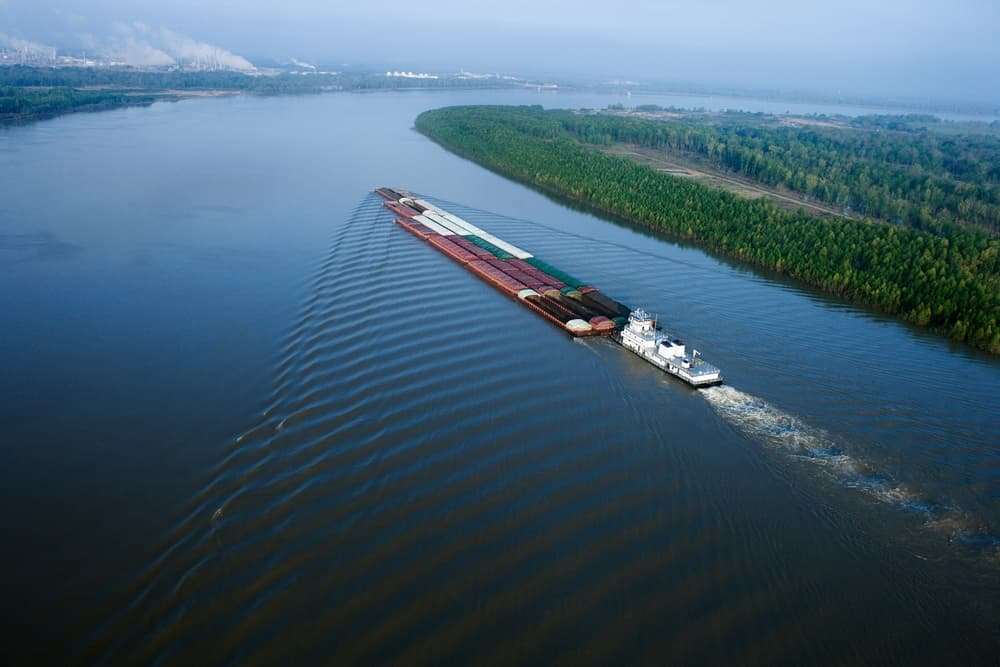
Rarely just one company. Inland barge operations are contracted out in layers, and each layer carries its own insurance policy. The point of a proper investigation is to find all of them.
| Party | What it controls | When it becomes liable |
| Towing company | The towboat, the crew, the tow plan | Unsafe crewing, fatigue, poor line handling, negligent navigation |
| Barge owner | Hull, rakes, deck fittings, coamings | Unseaworthy barge, corroded fittings, missing safety lines |
| Fleeting facility | Mooring, shifting, wire and cable rigging | Improper mooring, overloaded fleets, unsafe access between barges |
| Cargo owner or shipper | Loading, blocking, bracing, documentation | Overloaded or misdeclared cargo, unsafe residue in tank barges |
| Terminal or dock operator | Gangways, ladders, lighting, dock surfaces | Unsafe access, blocked walkways, inadequate lighting |
A cargo shift that injures a deckhand may be the shipper's fault, not the towing company's. A fall between two barges may come down to how the fleeting facility rigged the wires. These distinctions decide who pays, and they are not obvious from the incident report.
What Evidence Disappears First After a Barge Accident?
The most useful evidence in a barge case has a shelf life measured in weeks. That is why we send preservation demands before we do anything else.
- Voyage and engine room logs, which get archived or overwritten on a rotation
- Wheelhouse audio and electronic chart data, retained only for a short window
- Crew statements, which change once a company's counsel gets involved
- The barge itself, which may be cleaned, repaired, or sent to a shipyard within days
- Weather, tide, and current records for the exact hour of the incident
- Any Coast Guard marine casualty report filed on the event
We request all of it in writing, on the record, so a company cannot later claim it was routine destruction. That single step has changed the value of more of our maritime files than any courtroom argument.
Why Ship Channel Workers Bring Us Their Barge Injury Cases
We are a Houston firm, not a national intake operation that routes maritime calls to a call center. Our clients reach the same team from the first phone call through resolution.
Jose Calderon has been recognized on the Texas Super Lawyers Rising Stars list every year since 2020, a distinction awarded to fewer than 2.5% of Texas attorneys, and he was selected to The National Trial Lawyers Top 40 Under 40 by his second year in practice. He handles select tenant and landlord matters pro bono to this day, which tells you something about who he built the firm for.
Three things we do differently on barge files:
- We determine seaman status in the first week rather than the first deposition, because it drives the deadline
- We pursue the vessel interests and the shore-side parties in parallel instead of settling with the friendliest insurer first
- We handle the entire case in English or Spanish, matching the bilingual reality of the inland towing workforce
Ask us which law applies to your injury: (346) 999-5673.
What Can You Recover in a Houston Barge Injury Claim?
Seamen bringing Jones Act and unseaworthiness claims may pursue full damages, including past and future lost earnings, medical care, physical pain, and mental anguish. LHWCA benefits are narrower, covering medical treatment and a portion of lost wages, though a separate vessel negligence lawsuit may be available on top of them.
Unseaworthiness is worth understanding because it does not require proving anyone was careless. If the barge, its gear, or its crew was not reasonably fit for the work, the owner may be responsible regardless of fault. Frayed wire, a jammed ratchet, a rusted-out coaming, or a two-man crew doing a four-man job can each support the claim.
Future earning capacity tends to be the largest item in a barge file. Inland towing pay includes hitch premiums, overtime, and per diem that rarely appear on a base wage summary, and an insurer valuing the claim from a W-2 alone will undercount it substantially. We reconstruct actual earnings across several years so the wage loss reflects what the work paid.
Back and shoulder injuries carry a particular problem in this trade. A deckhand who cannot pull wire, handle lines, or climb a barge ladder is not returning to the deck, and the shore jobs available afterward often pay a fraction of vessel wages. Documenting that gap requires vocational evidence rather than a doctor's note.
Fatal barge accidents follow a different track. Surviving family members may bring claims under the Jones Act and general maritime law, and the available damages depend on where the death occurred and the worker's status at the time.
What If the Company Says You Were Not a Seaman?
Expect the argument. Denying seaman status is the most effective defense available in a barge case, because it moves the claim out of the Jones Act and into a benefits system with far lower exposure.
Employers make the argument in a few predictable ways. They characterize a moored barge or a barge in a fleeting area as not being a vessel in navigation. They point to time spent in the yard, on the dock, or in training to push your vessel time below the threshold. They rely on a job title such as utility worker or laborer instead of on what you actually did during a hitch.
These arguments are answerable with records rather than testimony. Crew change sheets, dispatch logs, timekeeping data, and payroll codes usually show the real split of your working time. A barge under tow, being loaded, or awaiting a tow is generally still in navigation, and periods of repair do not automatically break a worker's vessel connection.
We build the status record early because every other question in the case depends on it. Getting it wrong costs a year of deadline and most of the recovery.
How Long Do You Have to File a Barge Accident Claim?
Deadlines depend entirely on your classification, and they are shorter than most people assume.
Jones Act seamen generally have three years from the injury. LHWCA claims require written notice to the employer within 30 days and a formal claim within one year. Claims involving a government vessel or a public port authority can carry notice requirements as short as six months. Texas negligence claims against non-maritime parties run two years under Texas Civil Practice and Remedies Code Section 16.003.
If you are not sure which one applies to you, that is the reason to call rather than a reason to wait.
FAQ for Houston Barge Accident Lawyers
My employer's medical department sent me to their doctor. Do I have to keep going?
Seamen generally have the right to choose their own treating physician for maintenance and cure purposes, and company clinics have an obvious interest in returning you to duty quickly. LHWCA claimants may also select a physician subject to Department of Labor authorization. If you have been told you have no choice, that is worth a conversation before your next appointment.
What is maintenance and cure, and how much should it be?
Maintenance is a daily living allowance paid to an injured seaman until maximum medical improvement, and cure covers the related medical treatment. Both are owed regardless of who caused the injury. Many employers pay a low daily rate set by an old union contract rather than the actual cost of your rent and utilities, and that amount can be challenged.
Can I be replaced while I am off the barge recovering?
Retaliation against a worker for pursuing an injury claim is prohibited, but towing companies frequently reassign or decline to re-crew injured workers and describe it as scheduling. Keep every text message, crew list, and dispatch notice from the weeks after your injury. Those records matter later.
Does a barge accident that happened outside Texas still belong in a Houston case?
Possibly. Maritime claims can often be filed where the employer does business, and many inland towing companies operating on the Mississippi and Intracoastal systems have a significant Houston presence. Where a case is filed can affect its value, so venue is one of the first things we evaluate.
What if I signed something at the hospital?
Bring it in. Injured maritime workers are sometimes asked to sign releases, statements, or advance payment receipts while medicated or in pain. Not every document is enforceable, and the sooner we see what you signed, the more options you have.
The Channel Does Not Slow Down for an Injured Deckhand
By the time you get out of the hospital, that barge is loaded and moving again, the towboat has a new crew, and the paperwork explaining what happened is filed somewhere you cannot reach. The companies involved already have lawyers. That imbalance is the actual problem, and it is fixable on the same day you decide to fix it.
There is no charge for the conversation and no fee unless we recover for you. Call The Calderon Law Firm at (346) 999-5673 or reach a case manager online, any hour, in English or Spanish.