Yes. When another driver caused the crash, Texas law generally lets you claim the drop in your car's market value from that driver's liability insurer, even after good repairs. Your own collision coverage usually does not pay it. Every case is different, and a lawyer can help clarify your options.
A car that has been in a wreck is often worth less than an identical car that hasn't, even when the body shop does flawless work. That gap is the heart of the diminished value claim Texas law allows against the at-fault driver.
The rules are narrower than most online advice suggests. Who pays depends on whose policy you claim under, what the repairs looked like, and how well you can prove the loss.
Key Takeaways About Diminished Value Claims in Texas
- Deadline: A lawsuit for damage to your car generally must be filed within two years of the crash.
- Who pays: The at-fault driver's liability insurer may owe diminished value. Your own insurer usually does not under the standard Texas auto policy.
- Insurer behavior: Adjusters often open with a small number from an in-house formula, or say they "don't pay diminished value" at all.
- Your lawyer's role: Our legal team gathers the repair file and an independent appraisal and presents the loss with your injury claim.
- Risk of going alone: Signing a property damage release too early can end the value claim before it starts.
Key Statistics About Property Damage Crashes
- Most Harris County crashes involve no injury. TxDOT's 2025 county crash and injury report lists 73,155 non-injury crashes out of 107,472 in Harris County. For most drivers, the car claim is the whole claim.
- One reportable crash every 59 seconds statewide. TxDOT's 2025 Texas crash facts shows how many vehicles carry a new crash history each year.
- $25,000 minimum property coverage. Texas drivers must carry at least $25,000 in property damage liability under Transportation Code §601.072. On a newer truck or SUV, repairs, rental, and lost value can share that limit fast.
What Is Diminished Value?
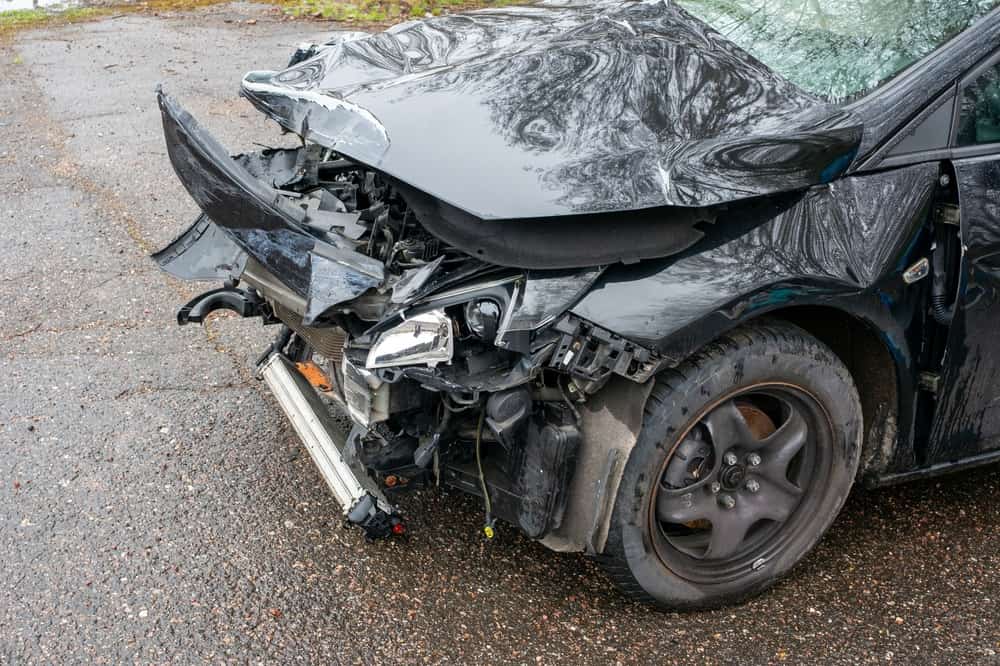
Diminished value is the difference between what your car was worth right before the crash and what it is worth after repairs. Buyers and dealers pay less for a car with an accident history, so the loss is real even when the car drives perfectly.
Why a Repaired Car Loses Value
A repaired car loses value mainly because of its history. Vehicle history reports and dealer appraisal tools flag reported accidents, and many buyers walk away or offer less.
Frame damage, airbag deployment, and structural repairs usually cause the biggest drops. On Houston's used-car market, a late-model truck with a clean history often trades at a clear premium over the same truck with a reported wreck.
Three Types of Diminished Value
Appraisers usually describe three kinds of lost value:
- Inherent diminished value: the loss from the accident history alone, even after proper repairs. Most Texas claims focus here.
- Repair-related diminished value: extra loss caused by poor repairs, such as mismatched paint, aftermarket parts, or panel gaps.
- Immediate diminished value: the drop right after the crash, before repairs. It matters less once the car is fixed.
Who Pays for Diminished Value in Texas?
In Texas, the at-fault driver's liability insurer is the usual source of payment. Your own insurer typically does not owe diminished value under your collision or comprehensive coverage when the repairs are done right.
| Type of claim | Whose policy | Diminished value owed? |
| Collision or comprehensive | Your own | Generally no, if repairs are adequate |
| Uninsured/underinsured motorist | Your own | May be owed, per TDI guidance |
| Liability (third-party) claim | At-fault driver's | Generally recoverable as property damage |
Can You Claim Diminished Value From Your Own Insurance?
Usually not. In American Manufacturers Mutual Insurance Co. v. Schaefer (2003), the Texas Supreme Court held that the standard Texas auto policy does not pay lost market value when a car is fully and adequately repaired.
The policy promises to "repair or replace," not to make up for a damaged reputation.
There is a narrow opening. A Texas Department of Insurance (TDI) bulletin on diminished value says your own insurer may owe lost market value under uninsured/underinsured motorist (UM/UIM) coverage. That coverage applies when the at-fault driver has no insurance or too little.
Claiming Against the At-Fault Driver's Insurer
A claim against the other driver is a third-party claim, and different rules apply. That same TDI bulletin says a liability insurer may owe a third-party claimant for loss of market value "regardless of the completeness of the repair."
The Texas Supreme Court describes the basic measure of damage to personal property as the difference in market value immediately before and after the injury. For a repaired car, that difference is the diminished value.
How Do You Prove a Diminished Value Claim?
You prove it with evidence of the car's value before the crash and after repairs, backed by the repair records. An independent appraisal is usually the centerpiece, because adjusters rarely accept an owner's estimate on its own.
What Evidence Supports a Diminished Value Claim?
Strong claims typically include:
- The final repair invoice and the shop's photos of the damage before repairs.
- The police crash report. Our guide to getting your Texas crash report explains how to order it.
- A written appraisal from an independent appraiser who is not paid by the insurer.
- Trade-in quotes from dealers who knew about the accident history.
How Insurers Calculate Lost Value
Many insurers use internal formulas that start from a small slice of the car's value, then cut it further for damage severity and mileage. The result often looks nothing like what dealers actually knock off for a wreck.
An independent appraisal gives you a number based on the real market.
Common Problems With Diminished Value Claims
The most common problems are denials, lowball offers, and releases that quietly end the claim. Knowing how adjusters handle these claims makes it easier to push back.
- "We don't pay diminished value." That is often true of your own policy but not of a third-party claim. Our attorneys typically respond with the TDI bulletin and the appraisal.
- Blame shifting. If the insurer says you were partly at fault, it will reduce the value claim by the same percentage.
- Early releases. A property damage check may come with a release covering "all property damage." Reading it closely before signing matters.
- Older or high-mileage cars. Insurers argue these cars had little value left to lose.
Our posts on dealing with insurance adjusters and how insurers devalue claims cover the same tactics on the injury side.

Texas Laws and Deadlines for Property Damage Claims
Texas gives you two years to sue for damage to your car, reduces your recovery if you share fault, and does not apply its prompt-payment penalties to claims against another driver's insurer. These rules shape how and when a diminished value claim gets resolved.
How Long Do You Have to File a Diminished Value Claim in Texas?
Generally two years from the crash. Civil Practice and Remedies Code §16.003 sets a two-year limit for suits over injury to property, the same period that applies to personal injury. Negotiations with an adjuster do not pause that clock.
How Shared Fault Affects Your Claim
Texas uses proportionate responsibility under §33.001. If you are found 20% at fault, your recovery drops by 20%. If you are more than 50% at fault, you recover nothing from the other driver.
Why Texas Prompt-Pay Rules Don't Apply
The deadlines and 18% penalty interest in Texas Insurance Code Chapter 542 cover first-party claims, meaning claims under your own policy. A claim against the at-fault driver's insurer is a third-party claim, so those penalties do not apply.
Pressure in these claims usually comes from evidence and, when needed, a lawsuit.
What Compensation May Include
A Texas property damage claim against the at-fault driver may include more than the repair bill. Insurers often pay the repair invoice and treat the file as closed, which leaves money on the table.
- Repair costs: the reasonable cost to restore the car.
- Diminished value: the market value lost after repairs.
- Loss of use: a rental car or its reasonable value while you were without the vehicle. In J&D Towing, LLC v. American Alternative Insurance Corp. (2016), the Texas Supreme Court allowed loss-of-use damages even when a vehicle is destroyed, limited to a reasonable replacement period.
- Related costs: towing, storage, and damaged items inside the car.
Injuries are a separate part of the claim, with their own evidence and value.
When Should You Talk to a Lawyer?
Talk to a lawyer when you were injured, when the value loss is large, or when an insurer denies the claim outright. If your only loss is a modest drop in value, you may be able to handle it yourself, and we will tell you so honestly.
Most of our clients reach us because someone was hurt. In those cases, our attorneys and case managers handle the property side and the injury side together, so one release doesn't undercut the other. Our Houston car accident lawyer page explains how we approach the whole claim.
Ways to Protect Your Car's Value Claim
Many drivers find it helpful to build the value claim while the car is still in the shop. Small steps early often make the appraisal stronger later.
- Keeping photos of the car before the crash, such as listing photos or recent pictures.
- Asking the shop for a line-item invoice that lists original equipment manufacturer (OEM) or aftermarket parts.
- Saving maintenance records that show the car's condition before the wreck.
- Holding off on signing any release until you know what it covers.
Diminished Value Claim Questions Answered by Attorneys
Can I claim diminished value if my car was totaled?
No. A totaled car is paid at its actual cash value before the crash, so there is no repaired car left to lose value. You may still claim loss of use for a reasonable period while you replace it, plus towing and storage costs.
Do I have to sell my car to prove diminished value?
No. Most claims are proven with an appraisal of the car's value before and after repairs. Dealer trade-in quotes can help, but you don't need to sell the car or show a sales loss.
Can I file for diminished value on a leased car?
Often the leasing company, as the owner, holds the claim, but many leases shift the lost value back to you at turn-in. Reading the lease's damage and return terms comes first, and a lawyer can help sort out who can make the claim.
Is diminished value worth claiming on an older car?
It depends on the car. A high-mileage sedan may lose little, while an older truck in strong condition can still lose real value in Houston's used-truck market. An appraiser can tell you whether the numbers justify the effort.
Can I still claim diminished value after I cashed the property damage check?
Maybe. It depends on whether you signed a release and what it covered. A check that only paid repairs, with no release, may leave the value claim open. A signed release for "all property damage" often closes it.
You Paid for a Clean Car. The Insurer Should Pay for What It Lost.
You didn't choose to drive a car with an accident history. You made your payments, kept up the maintenance, and planned on that trade-in value. Someone else's mistake took part of it.
The Calderon Law Firm offers a free consultation and works on a contingency fee, commonly about 33% to 40% of the recovery in Texas. No Fee Unless We Win, and we will never take home more than you do.
Se habla español: you can talk with our team directly in Spanish, no interpreter needed. We're available 24/7 at +1 (346) 999-5673, or at our office at 6750 W Loop S #920 in Bellaire, on Houston's West Loop.