





An elevator or escalator is supposed to be one of the safest ways to move through a building, so an injury on one can leave you angry as well as hurt. The Calderon Law Firm is a Houston elevator accident lawyer team that investigates what went wrong and who should answer for it, for clients across Greater Houston in English and Spanish.
We handle elevator, escalator, and lift injury claims against building owners, maintenance companies, and manufacturers. Call +1 (346) 999-5673 any time for a free case review.
Who Is Responsible When an Elevator or Escalator Malfunctions?
Several companies can share responsibility, and we look at each one. A building owner, a property manager, a maintenance contractor, and an equipment manufacturer all play a part in keeping a lift safe, and our job is to find out which of them failed.
| Who controlled the equipment | What we investigate | Evidence to request |
| Building owner | Whether the equipment was inspected, certified, and properly maintained | Operating permit or certificate of compliance, inspection reports, incident reports, and lobby video |
| Property manager | What the manager knew about complaints, outages, or repeated problems | Tenant complaints, outage logs, and emails with the service company |
| Maintenance contractor | Service records, repair histories, and whether warnings were followed | Service contract, call-back logs, work orders, and the parts it replaced |
| Manufacturer or installer | Whether a design or installation defect contributed, which may support a product liability claim | Model and installation date, service bulletins, and design records |
The answers sit in records and equipment that these companies control, which is why we move quickly.
Which Agency Inspects Elevators in Houston?
Inside Houston city limits, the City regulates elevators and escalators, not the state. TDLR's program summary says the agency does not regulate equipment inside the City of Houston, and the City's Public Works elevator section requires an annual inspection by an authorized third-party inspector before it issues an operating permit for equipment in commercial buildings.
Outside the city, in most neighboring cities and in unincorporated Harris County, the state program generally applies. There, owners must have equipment inspected annually by a registered elevator inspector, display a certificate of compliance where the public can see it, and maintain the equipment to the adopted standards. These duties come from Section 754.019 of the Health and Safety Code.
For a building inside the city, we request the operating permit history and the third-party inspection reports. For a building under the state program, we request the certificate, the annual inspection reports, and the accident report the owner must send TDLR within 24 hours.
How Do We Build an Elevator Injury Claim?
We build it the way an engineer would approach a failure, by finding out exactly what broke and why. Our founder describes the approach as leaving no stone unturned.
- We send preservation letters so the equipment, parts, and logs are not repaired or discarded.
- We request inspection, maintenance, and complaint records from every company involved.
- We review surveillance video and incident reports from the building.
- We bring in engineers and other outside professionals when the case calls for them.
- We handle the insurers while you recover.
Serious cases are a team effort. Our founder, José Calderón, notes that outside professionals want to work with lawyers who know how to present their opinions, and we have built relationships with professionals in many fields.
Why Equipment Evidence Disappears Fast
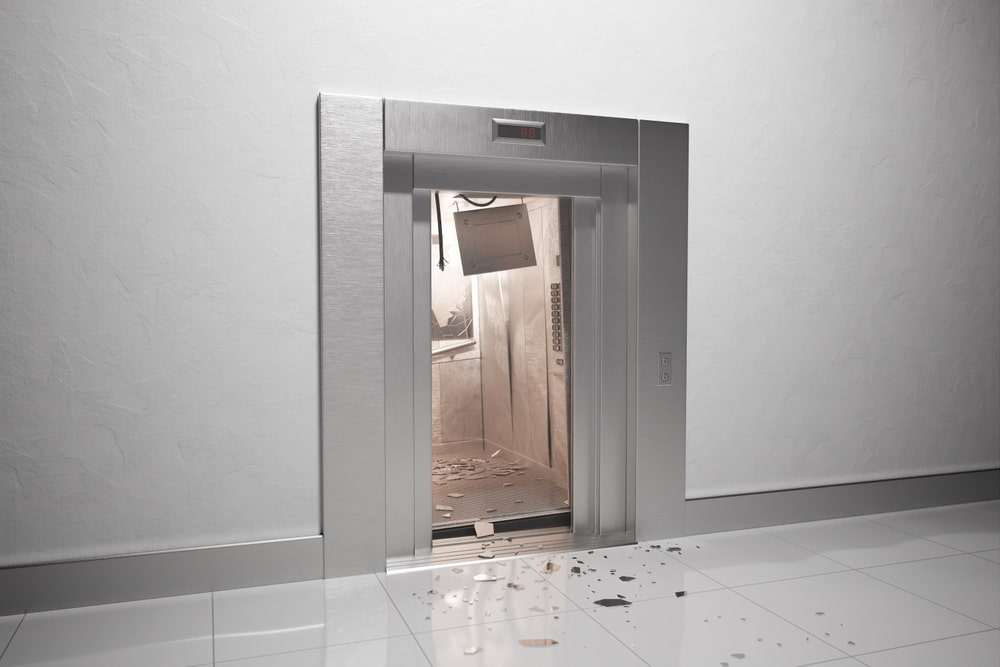
Once a building repairs an elevator, the broken part may be thrown away and the maintenance log updated. Early preservation letters keep the physical and written proof intact.
What You Can Gather Yourself
A few items are easier to collect in the first days than months later. If you are able, or if a family member can help, keep these:
- The building's incident report number and the name of the employee who took it
- Photos of the elevator car, the threshold, the floor indicator, or the escalator step where you were hurt
- Names and phone numbers of anyone who saw the incident or was stuck with you
- The posted certificate or permit, photographed in the car or lobby
- Medical records, discharge papers, and receipts from the first visit
What Elevator and Escalator Cases Do We Handle?
We take cases involving injuries on elevators, escalators, and other lifts, in offices, apartment buildings, hotels, hospitals, and stores.
- Sudden drops, stops, or door malfunctions
- Misleveling that leads to trips and falls at the elevator threshold
- Escalator entrapment or sudden stops
- Injuries to maintenance and service workers
- Wrongful death after an elevator or escalator failure
Many of these cases overlap with our slip and fall and broader premises liability work, and we handle all of it.
Escalator Injuries in Stores, Stadiums, and Airports
An escalator injury attorney in Houston works from different proof than in an elevator case. An escalator has no car or call log, so the evidence usually comes from the unit's controller fault codes, the condition of the steps and comb plates, and video from store or concourse cameras.
Airport terminals and county buildings add one more step. When a public body owns the escalator, the six-month government notice rule covered under Time Limits can apply.
Do I Need a Houston Elevator Accident Lawyer?
If an equipment failure hurt you, a lawyer can make sure the building and its contractors do not control the story. The consultation is free, and a building's insurer may start building its own file right away.
Dealing With Building Insurers
Property insurers may ask for a statement or offer a quick payment. Before you agree to either, talk with us. Our founder reminds clients that the insurance company is not your friend.
We take over those conversations once you hire us, so the building's insurer deals with our team instead of with you. That keeps your words from being used against you while the investigation is still underway.
Time Limits
Texas generally gives injured people two years from the date of the injury to file a lawsuit under Section 16.003, and exceptions can change the deadline. Starting early gives us time to inspect the equipment before it changes.
If a government body owns the building, a written notice of the claim is generally due within six months under Section 101.101, and some city charters set a shorter period. A child's extra time to file suit does not extend that notice deadline, as the Texas Supreme Court held in Martinez v. Val Verde County Hospital District.
Deadlines for Manufacturers and Installers
Separate statutes of repose can bar claims against some companies even while the two-year period is still open. A products claim against a manufacturer or seller generally must be filed within 15 years of the sale under Section 16.012, and a claim against a company that built or repaired an improvement to real property generally within 10 years of substantial completion under Section 16.009.
Section 16.008 sets a similar 10-year period for licensed architects and engineers who designed or inspected the work. Take an elevator sold in 2005 and modernized in 2018: a products claim against the original maker may be barred from 2020 on, while a claim tied to the 2018 work may still be open.
Each period has statutory exceptions: a longer written warranty, an injury during the final year of the construction period (which leaves two more years to sue), and the rule that the construction repose does not shield the party in possession or control of the property. Whether an elevator installation is an improvement to real property is a fact question we check against installation and repair records.
What Can We Pursue for You After an Elevator Injury?
We pursue the full cost of what the injury took from you. That includes medical bills, lost income, and the harder-to-measure effects on your daily life, and in a fatal case, the losses suffered by the family.
The right number depends on your injuries and the proof. We will not guess at a figure before we have the records, and we will not promise one.
When the Injury Affects Your Ability to Work
If you cannot return to your job or must work differently, we document that loss with employment records and, when needed, outside vocational professionals. Many of our clients are workers who depend on their bodies to earn a living, and we treat that loss seriously.
How Long Does an Elevator Injury Claim Take?
Elevator claims often take longer than a typical crash claim, because the equipment, records, and responsible parties are more complex. We give you an honest picture of the timeline once we see the evidence.
Why We Do Not Rush
We generally advise against settling before the full cost of your medical care is known. A settlement is final, and our founder reminds clients that you get one shot at it.
How Do We Handle Owners, Contractors, and Manufacturers With Their Own Lawyers?
We handle them one company at a time, gathering each one's records and insurance separately. An owner, a maintenance contractor, and a manufacturer usually have separate insurers and lawyers, and each may point at the others.
How We Prepare for Large Defendants
José Calderón says of serious cases that "It takes a village," and our team prepares for these cases with that in mind. We invest in the case, hire the right professionals, and do not back down because the other side has more money.
Why Houston Clients Choose The Calderon Law Firm
People hurt on elevators want straight answers and a team that understands how equipment fails. Here is what we offer.
- Free case review with an honest opinion
- No Fee Unless We Win, so you owe no attorney fee unless we recover for you
- Attorneys and case managers who keep you informed, in English and Spanish
- A willingness to invest in engineers and investigation before the outcome is certain
- Available 24/7 at +1 (346) 999-5673
We do not promise results. We do promise that your case will be taken seriously and prepared as if it will be tried.
Our team also invests in the early work. Sometimes we sign cases before we know whether a claim will hold up, and we put the firm's own time and money into finding out, because a client who trusts us gets a real answer.
If it turns out we cannot help, we will tell you plainly and explain why, so you can decide what to do next.
How Much Does an Elevator Accident Lawyer Cost?
You pay no attorney fee unless we win your case, and the first consultation is free. We explain the fee in plain numbers before you hire us.
We explain the contingency percentage and case costs in writing before you sign. The amount you receive depends on the recovery, expenses, liens, and the agreement.
Where Would a Houston Elevator Case Be Filed?
Texas venue rules in Section 15.002 generally allow a suit in the county where the events happened or where a corporate defendant has its principal Texas office. Houston reaches into Harris, Fort Bend, and Montgomery counties, so a Houston-area building is not always in Harris County, and we confirm the proper county and court before filing.
Many claims settle without a lawsuit, but we prepare every case for court, so that building owners and their insurers know we are ready to try it if a fair resolution is not offered.
FAQs: Houston Elevator Accident Lawyer
These are questions people ask when deciding who should handle an elevator injury claim.
Should I report an elevator accident to the building before I call a lawyer?
You can report the incident to building management, and it helps to keep a copy of anything you submit or sign. Avoid giving a recorded statement to the building's insurer until we have spoken, because that statement can be used later to question how the injury happened.
Can you take my case if the elevator was in a hospital or apartment complex?
We take elevator and escalator claims in hospitals, apartment complexes, and many other buildings. We look at who owned, managed, and serviced the equipment, then explain which parties may be responsible. A public hospital can add a government notice deadline, and an apartment complex often hires an outside service company, so we check both early.
Can I bring a claim if the elevator passed its last inspection?
A passed inspection or a current certificate does not by itself decide whether an owner, contractor, or manufacturer may be responsible for an injury. Inspections show the equipment on one day, and problems can develop between visits, so we review maintenance history, complaints, repairs, and the equipment itself.
What if I was hurt while working on or servicing the elevator?
An injured elevator mechanic or service worker may have a workers' compensation claim, a negligence claim against a non-subscribing employer, or a third-party claim against the building owner, manufacturer, or another contractor. The right path depends on the employer, its coverage, and which companies controlled the equipment, and more than one can apply.
Do you represent clients who only speak Spanish?
Our attorneys and staff represent Spanish-speaking clients directly, without an interpreter. Se habla español, so you can explain what happened in your own words and ask about the investigation, the fee agreement, or a settlement offer in the language you are most comfortable using.

Start With a Free Review of What Happened
Tell us where the building is, what the equipment did, and how you were hurt, and we will explain who likely controlled the elevator and what comes next. The Calderon Law Firm is available day or night.
Call +1 (346) 999-5673 or contact us online. Past results do not predict future outcomes.