





Losing someone in a car crash leaves questions that no one seems able to answer, and you should not have to chase those answers while you grieve. The Calderon Law Firm helps Houston families find out what happened, protect the evidence, and hold the responsible drivers and companies accountable.
A Houston fatal car accident lawyer from our team can review your family's situation at no cost, whenever you feel ready. We handle fatal crash claims throughout Houston and Harris County, and we charge no fee unless we win. Se habla español: your family can speak with our team directly in Spanish, with no interpreter needed.
When you are ready to talk, call +1 (346) 999-5673 for a free, private case review. We answer 24/7.
How a Fatal Crash Attorney in Houston Helps Your Family
Our attorneys run an independent investigation, deal with the insurance companies, and pursue a civil claim on your family's behalf. That lets you focus on each other while we focus on the facts. You do not need to know anything about the law to start.
Families often come to us weeks after a crash, frustrated that no one will tell them what happened. The police report may not be ready, the insurance adjuster keeps calling, and the vehicle is sitting in a tow yard. Our role is to take those calls and tasks off your plate.
What we handle for your family
- Requesting the crash report and following the police investigation
- Preserving the vehicles, video, and electronic data before they are lost
- Speaking with every insurance company so you do not have to
- Identifying every driver, employer, or business that may share responsibility
- Keeping you informed through a dedicated case manager
Each family decides how involved they want to be. Some want every detail. Others want a short update when something changes. We follow your lead.
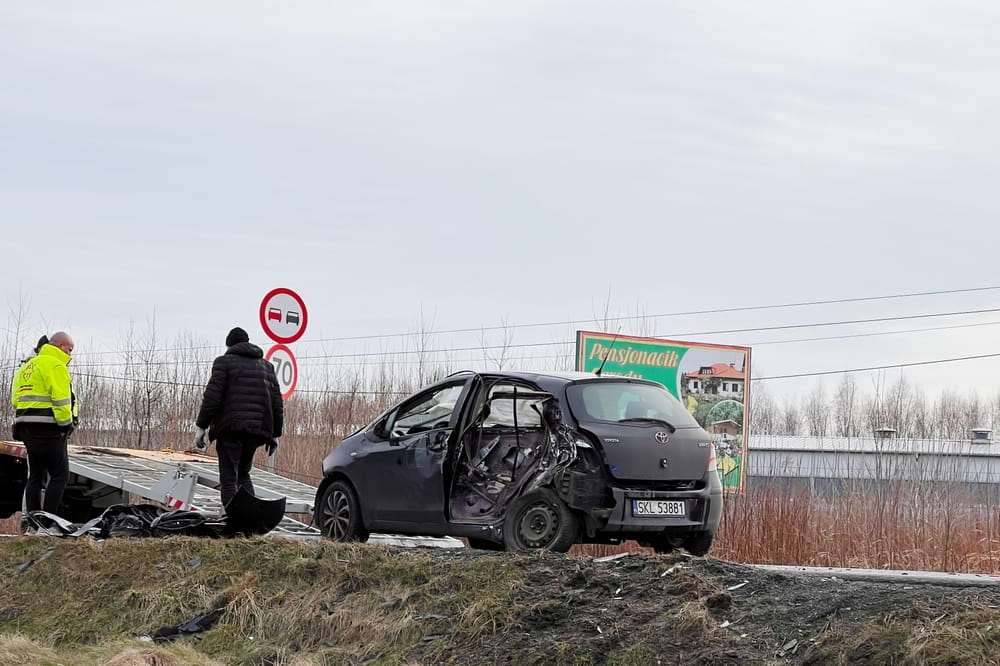
What Happens After a Fatal Crash in Houston?
Police investigate every fatal crash and file a Texas Peace Officer's Crash Report, called a CR-3. Inside Houston city limits, the Houston Police Department's Vehicular Crimes Division typically handles the investigation. In unincorporated Harris County or on some state highways, the Harris County Sheriff's Office or the Texas Department of Public Safety may investigate instead.
The HPD Vehicular Crimes Division investigates fatal crashes, hit-and-run crashes, and other crashes with a possible criminal element. Its investigation often takes much longer than a routine crash report, especially when toxicology or reconstruction is involved.
| Agency or office | What it does | What your family can request |
| Investigating police agency (HPD, HCSO, or DPS) | Investigates the crash and files the CR-3 | The CR-3 crash report |
| Texas Department of Transportation (TxDOT) | Keeps CR-3 reports in its Crash Records Information System (CRIS) | A copy of the CR-3, regular or certified |
| Harris County Institute of Forensic Sciences | Serves as the county medical examiner | The completed autopsy report |
| Harris County District Attorney's Office | Decides whether to bring criminal charges | Updates on any criminal case |
How can your family get the crash report?
Texas law lets potential wrongful-death claimants obtain the CR-3. The Texas Department of Transportation crash report page explains how to buy it online, for $6 for a regular copy or $8 for a certified copy.
Our step-by-step guide to getting a Texas crash report walks through the process. When you hire us, our team requests the report for you.
Getting the Autopsy Report
The Harris County Institute of Forensic Sciences releases completed autopsy reports to requesters, and a PDF copy can be emailed at no charge. The autopsy can matter in a civil case, for example to show whether the other driver was impaired or how the injuries occurred.
Is the Criminal Case the Same as Your Family's Civil Claim?
No. A criminal case is brought by the State of Texas to punish the driver, while a civil claim is brought by the family to recover damages for their losses. The two cases run on separate tracks, with different lawyers, different rules, and a different burden of proof.
| Criminal case | Civil claim | |
| Who brings it | The State of Texas, through the District Attorney | The family or the estate |
| Goal | Punishment, such as prison or probation | Money damages for the family's losses |
| Burden of proof | Beyond a reasonable doubt | More likely than not (a preponderance of the evidence) |
| Who controls it | The prosecutor | The family, with their attorneys |
Depending on the facts, a driver who causes a death may face serious charges. Under the Texas Penal Code, intoxication manslaughter (§49.08) is a second-degree felony, and criminally negligent homicide (§19.05) is a state jail felony. A conviction can support a civil claim, but a civil claim does not depend on one.
Help for families when the crash involved a crime
If a drunk or hit-and-run driver caused the crash, your family may qualify for help from the Texas Crime Victims' Compensation Program. The Texas Attorney General's eligibility page lists DWI crashes and hit-and-run crashes as qualifying crimes, while ordinary car accidents do not qualify.
The program can pay up to $6,500 toward funeral and burial costs, and applications are generally due within three years of the crime. It pays only after other sources, such as insurance, so our team can help you coordinate it with your civil claim.
If your family is facing these questions right now, call +1 (346) 999-5673. We will listen first, and there is no cost to talk.
Why the First Weeks Matter for Evidence
Much of the evidence in a fatal crash case belongs to someone else and is kept only for a short time. Wrecked vehicles are sold for salvage, surveillance video is recorded over, and phone records become harder to get. Acting early gives your family a far clearer picture of what happened.
Our attorneys often see cases where the police report tells only part of what happened. We typically send preservation letters to the drivers, insurers, tow yards, and nearby businesses, asking them to keep the evidence. We then work with accident reconstruction analysts who can review:
- The vehicles' event data recorders, which store speed and braking data
- Video from traffic cameras, businesses, and dashcams
- Skid marks, debris, and road conditions at the scene
- Cell phone records that may show distraction
- Toxicology results and bar receipts that may show impairment
On busy corridors like I-45, the West Loop (I-610), US-59/I-69, and Beltway 8, nearby businesses and toll systems may have cameras. That footage often disappears within days or weeks.

Who Can File a Claim After a Fatal Car Accident in Texas?
Under Texas law, the surviving spouse, children, and parents of the person who died may bring a wrongful death claim. Siblings, grandparents, and other relatives are not included. The estate may also bring a separate survival claim for what the person suffered before death.
These rules come from Texas Civil Practice and Remedies Code §71.004. If no family member files within three months after the death, the executor or administrator of the estate must bring the claim unless all of the family members ask them not to.
The deadline is usually two years from the date of death, under §16.003 of the same code. Our Houston wrongful death lawyers explain these claims in more depth, and our article on the Texas wrongful death statute of limitations covers the exceptions.
How Insurance Works After a Fatal Crash
The at-fault driver's liability insurance is usually the first source of payment, but it is often not enough. Texas requires only $30,000 in bodily injury coverage per person, under Texas Transportation Code §601.072. That minimum rarely covers what a family loses.
We look for every other policy that may apply:
- Uninsured or underinsured motorist (UM/UIM) coverage. This coverage on your loved one's own policy can pay when the at-fault driver has little or no insurance.
- Employer coverage. If the at-fault driver was working, the employer's commercial policy may apply.
- Dram shop claims. A bar or restaurant that served an obviously intoxicated driver may be responsible under the Texas dram shop law.
Insurers may also try to blame the person who died. Texas uses proportionate responsibility, so a family can recover only if their loved one was 50% or less at fault, under §33.001. We work to build the evidence that answers those arguments.
What Can a Fatal Crash Claim Recover?
A fatal crash claim may recover the financial support your loved one would have provided, funeral and medical costs, and the family's grief and loss of companionship. No amount of money replaces a person. A claim can, however, give a family stability and hold the responsible party accountable.
Depending on the facts, damages may include:
- Funeral and burial expenses
- Medical bills from before the death
- Lost earnings, benefits, and household support
- Loss of love, companionship, and guidance
- Mental anguish of the surviving family
- Pain your loved one suffered before death (through the survival claim)
When a driver acted with gross negligence, such as driving drunk, Texas law may allow exemplary damages meant to punish that conduct.
"When you settle a case or get a verdict, you get one shot. That's why we look at the care our client is going to need in the future, not just today."
José Calderón, founding attorney
For families, that means our attorneys and case managers look years ahead: the income that would have supported a household, the children who will grow up without a parent, and the costs that will keep coming. If a loved one survived with injuries, our Houston car accident lawyers can help with that claim too.

How Your Case Moves Forward With Our Team
Most fatal crash claims begin with an investigation, move to negotiations with the insurers, and resolve through settlement. If the insurers will not make a fair offer, we can file suit in the Harris County civil district courts at 201 Caroline in downtown Houston. We will explain each step before it happens.
- A private conversation. We listen, answer your questions, and tell you honestly whether we can help.
- Investigation. We gather records, preserve evidence, and identify every source of insurance.
- Claim and negotiation. We present your family's losses to the insurers and negotiate.
- Lawsuit if needed. We file in court and prepare the case for trial.
These cases usually take many months, and sometimes longer when a criminal case is still open. We will not promise a result, but we will keep you informed.
What does it cost to hire our firm?
Nothing upfront. We work on a contingency fee, a percentage of the recovery that is commonly about 33% to 40% in Texas. If we do not win, you owe no fee, and we will never take home more than your family does.
Fatal Crash Questions Houston Families Ask Us
Can we still file a claim if the driver who caused the crash also died?
Yes. A claim can still be brought against the at-fault driver's estate, and that driver's liability insurance typically still applies. Other responsible parties, such as an employer, may also be part of the claim. The two-year deadline still applies, so it helps to talk with an attorney early.
Do we have to wait for the criminal case to finish before filing a civil claim?
No. Your family does not have to wait for charges, a trial, or a conviction to pursue a civil claim. In some cases, our attorneys coordinate timing with the criminal case so that evidence and testimony are handled carefully. The civil deadline keeps running either way.
Should we accept the insurance company's first offer?
It is usually wise to talk with a lawyer before accepting any offer or signing a release. Early offers often come before anyone knows the full value of the family's losses. Once you sign a release, you typically cannot reopen the claim.

Here for Your Family When You Are Ready
There is no right time to think about a legal claim after losing someone. When you are ready, our attorneys and case managers will listen, answer your questions in English or Spanish, and handle the legal work with care.
You can read our Google reviews to hear from families we have helped. Call +1 (346) 999-5673 for a free, confidential case review, day or night. No fee unless we win.